Monday, November 23, 2009

Dunhuang

From the extensive readings on Dunhuang in the Course Reader and the textbook, we have been asked to determine:

what is the socio-political situation at the site, and how does Buddhism figure in? What do we know, and what do we not know, that might help us reconstruct the actual practice of Buddhism in the Dunhuang region?


So firstly, what is the socio-political situation at Dunhuang?

Dunhuang was a large oasis settlement supporting a considerable population and many temples to various faiths. Cotton fields flourished and sheep and goats grazed on the extensive pastures (chapter 7, pg 88). This goes to show, that Dunhuang was a prominent oases town that had much to offer in terms of economic capabilities. In geo-political terms, the fact that Dunhuang was at the eastern most point of the Silk Road, made it a key place travellers and explorers aimed to reach. If it were not for the Silk Road path, Buddhism may not have taken hold in China to the extent that it did.

How does Buddhism figure in?

As we know from reading about Abott Wang, Dunhuang was home to the Caves of the Thousand Buddhas, making it the most important desert oases. This cave site came to be because there were large monk population in Dunhuang, and beginning in the fourth century AD, the caves were hollwed out in cliffs and eventually filled with clay sculptures of Buddhist deities, and with wall-paintings influenced by earlier Buddhist sites such as Bamiyan and Gandhara. Buddhism was brought to China along the Silk road, and was enthusiatically adopted and flourished for many centuries.

What might help us reconstruct the actual practices of Buddhism in the Dunhuang region?

The documents that were found in the caves point to those who would have been in Dunhuang and the religions and beliefs that they each held. Not only were there documents on religious texts, there were also such things as lease agreements. The manuscripts and governing documents clearly reconstruct not only the religious practices of the region, but the every day activities as well.

Monday, November 16, 2009

Indian Buddhism - Gandharan Art

Hey Everyone,
I was really curious to see how the Greco-Buddhist art that we are now reading about from India was influenced by and reflected such prominent Greek features. Here are a few pictures I found that I think demonstrate Western influence on this Buddhist artwork:


Monday, November 9, 2009

Buddhism

I remember hearing the story of the Life of Buddha when I was in first year. It seemed so imaginative and far away from anything I understood. The term Buddha means 'enlightened one' and when I first heard this story, I was astonished at the connection between me in my first year seat in the Mining Building, and the students of Gautama (the Buddha). His teachings were of course all done orally, and because the original teachings of the historical Buddha are near impossible to recover or reconstruct, as far as anyone could know, I was hearing my professor attempt to teach me, what Buddha taught to his students.

Even when the Buddha died, the community of his followers set up councils to deliberate over his teachings, and it was within this first set of early monks that the memorization and retention project evolved into a variety of oral canons. What is most amazing about this, is that even today, there is much deliberation over the specific language the Buddha spoke and taught in.

Briefly speaking, King Asoka, emperor in the Mauryan dynasty, allowed for the flourishment of the Buddhist community in India. He was responsible for the propagation of Buddhism across Asia, and even commissioned monuments along significant sites to the life of the Buddha.

Aside from this historical context, like Zoroastrianism, I am deeply fascinated with the principles that guide the religion to morality. The eightfold path of virtues is amazing for me to read, and even follow, as I strongly believe that these subsections of wisdom, moral code, and mental development are necessary for any human begin, even (and especially today) to become a good and honourable person.

This website explains the path more coherently than I ever could:

http://www.thebigview.com/buddhism/eightfoldpath.html

Monday, November 2, 2009

Zoroastrianism

Before I say anything else, I absolutely love studying Zoroastrianism. I took RLG100Y in first year and I found this religion in particular to be so enlightened and just simply fascinating. The doctrines and the seven stages of evolution as a concept is captivating because it is so different than what I commonly conceive of as religion (clearly I've been far too influenced by Western religions).

The underlying customs of the religion examine similar areas of the Western religions that I have come to know. The belief is that light is good, and darkness if evil. This is clearly comparable to Genesis in the bible, as ‘...in the beginning there was light.’ I think the concepts of God, judgment, heaven and hell (darkness and light) all found within Zoroastrianism were very likely to have influenced the Western religions thereafter.

One of the most intriguing parts of this religion to me, is the idea of monotheism entrenched within dualism. Though there is one universal God, the spirits of Truth and the antithesis of this, Lies or chaos, conflict with each other, and in play out within humanity.


While the Mary Boyce article is serving mostly as a refresher, the next article on Zarathustra was almost delightful to read. The Yasnas of the Cow's Lament, the duality between the spirits represeting on one side by the 'smasher of resistance', etc. were all fascinating. I especially enjoyed examining the relationship between Zarathustra and Ahura Mazda as reflected through their dialogue. Zarathustra speaks with such high respect for Ahura Mazda and he genuinely seems to appreciate and adhere to the teachings Ahura Mazda provides. This should be so, as Ahura Mazda is this highest possible object for worship.


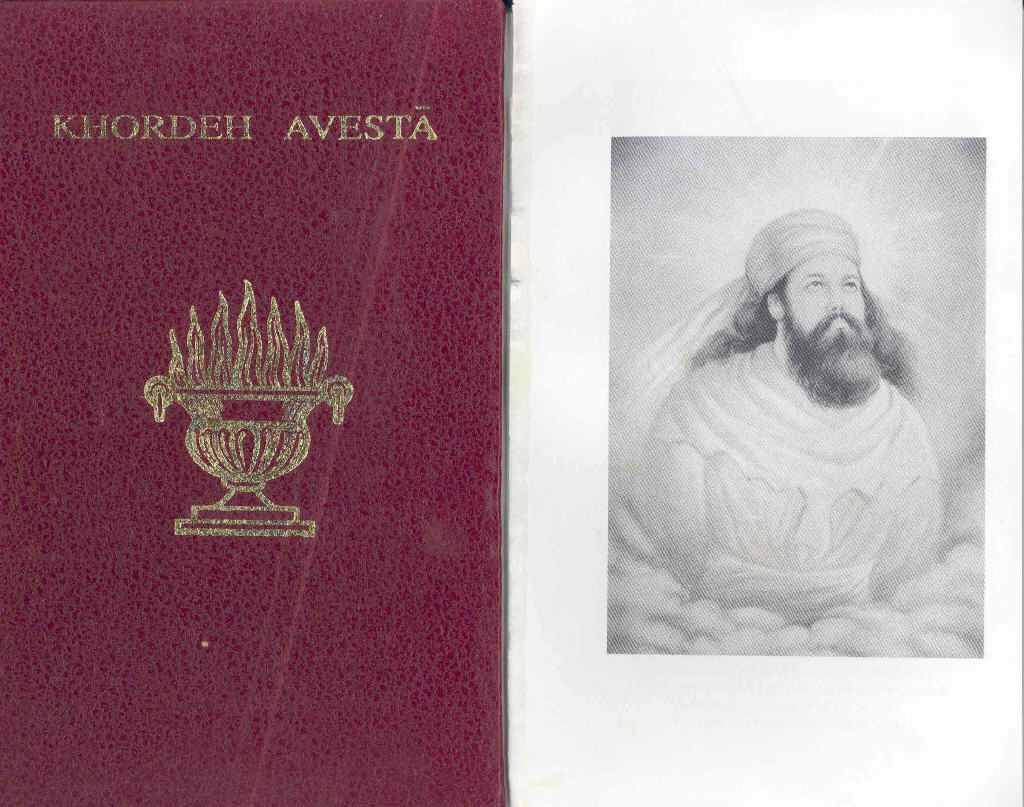
Zoroastrian followers are often described as fire worshippers, this is even evident on inside and out of their Avestas as there is a pit of fire on the cover.


Cultural Anthropology of Religion

So far, I have found all the readings from the Encyclopedia of Cultural Anthropology to be very informative as well as thought provoking. This week’s reading, on Religion, raises many different questions and opinions of how religion should be studied, with the ultimate aim of determining what exactly defines religion.
It begins with listing the universal certainties that surround the study of religions that anyone would find difficult to argue with. This is a very concrete list that includes the fact religion is an extremely powerful motivator of behaviour, and that religion provides numerous functions for its adherents such as comfort and reason. I agree with these notions, as they provide a fundamental agreement for us as scholars to branch out from.

There were a few areas in particular that peaked my interest. In the development of the study of religion throughout the chapter, it is astounding to see such ethnocentrism and racism in the early studies. Anthropology’s early focus was based on the polarity between primitive and civilized. This offensively seems to fit perfectly with the ‘orientalist’ view that Said and many others brought to a forefront. Later in the chapter, a perusal of current anthropological sources reveals inconsistencies in this type of polarized structure. For example, how can one consider the notion of religious ‘ghosts’ primitive, when Western cultures believe so prominently in ancestors and angels? This is something that I personally found very interesting because it seems almost impossible now for anyone to not raise these type of questions. How can one criticize something so similar to their own beliefs – or if not their own, the ‘western civilized’ belief they are comparing these primitive cultures to? This was however, the dominant thought of the time and it is only now that it these such structures are found insulting.

The quest for origins continues and there is a move from two vastly separated schisms to Tylor’s evolutionary progression of religion moving from animism to polytheism to monotheism. Frazer moves from this in the late 19th C to talk about his own evolutionary scheme of magic to religion to science. This seems to represent a general 'moral' step in the development of religious study.

By far, the part of this chapter I found the most interesting was the Biology of Religion subsection. What I was immediately drawn to was the thought in my head that science and religion don't usually fit together too well, and here they are, working together. They both usually compete in trying to explain the world around us, but this time they are working hand in hand. It's humbling almost. Anyway, back to the point - this idea of biology is supposed to emphasize the ways in which religious strictures enhance human survival, adaptation and reproduction. The discovery of endorphins largely helped this study because this development allowed for anthropologists to realize that external stimulates influence brain activity. This amazing discovery has the ability to unify anthropological theory because anthropologists can study the biology of behaviour and shift the focus from differences to similarities in religious conceptions across cultures.
The major question that seems to be lingering throughout the chapter is the idea that the phenomenon of the religious experience cannot be unbiasedly documented. Those outside of the religious experience looking in as a way to study and compare, miss out on the essential feeling of the religious experience. In contrast to this, those wishing to document their personal religious experience as a means for others to learn from, have the problem of being to engulfed in the situation to have a anthropological stance, rather than a religious one. This is a dilemma that will probably always exist because when it comes to religion it is difficult, if not impossible, to find someone who can truly understand all points of view of the religious experience, and still remain impartial in order to analyze, compare and document for anthropological study.

Monday, October 19, 2009

Two Thousand Years in the Heart of Asia - Chapter 5


Upon reading this chapter, my first impression was an enlightened realization on how valuable that map quiz actually was! Memorizing the places on those two maps as well as reading ‘Foreign Devils’ gave me a much better understanding of the geographical context and people I was so overwhelmed by in my first blog entry.

A first point of interest in this chapter, as briefly discussed in class, was the mummification discoveries. I won’t get into this part too much considering we’ve talked about it already, but the fact that there are methods to trace the general migration pattern of these European ‘Tocharians’ into Loulan from as long as 4000 years ago is simply amazing.

The history of the Sogdians is fascinating because we see the early developments of the trade routes. They were well known as far as Greece because of Alexander the Great, and they appeared to have managed to monopolize a triangle trade route with India and China. The map quiz helped me put a perspective of their general whereabouts because on page 68 it is noted that Panjikent was a Sogdian city, and Samarkand, previously Marakanda, was the Sogdian capital. Now that I can visualize this area, I can see how it was so accessible to Alexander the Great and his army.

After reading the list of items Sogdian merchants transported (I.e. Chinese paper) I believe that it would not be a far stretch to suggest that Sogdian merchants were responsible for the transportation paper manufacturing. The establishment of paper manufacturer in Samarkand in the eight century led to the gradual transmission of paper-making in Europe (67).

Another interesting fact about the Sogdians, is that the Sogdian merchants and travellers were mainly responsible for the spread of Zoroastrianism along the Silk Roads and into China and India. Though the religion was only tolerated in China in the Tang dynasty, the Sogdians can be said to be responsible for Zoroastrian believers that to this day remain in India.

Side note… I loved the bit at the end about Marco Polo. I never knew that he traveled with his family, it’s amusing to me to refer to them as “The Polos.”


Monday, October 12, 2009

Hou Hanshu : Western Regions

I am currently reading the Han Histories [http://depts.washington.edu/silkroad/texts/hhshu/hou_han_shu.html#sec1], and I must admit... the length of this website intimidates me.

Professor Goodman wants us to think about what constitutes historical writing, and if we would classify this piece within this genre. So far I find that there is no doubt in my mind that would consider this work as anything but historical writing. It is compliled by Fan Ye (I looked this up online) who used a number of earlier histories to create his 'official history'. This to me legitmizes Fan Ye's work because the history is created by people who lived and experienced the exact context they are writing about. While this fact makes it fascinating because we are getting almost a first hand account, so far the reading itself is not thoroughly engaging.

Okay, back to the reading...
So far I am so glad that I read the textbook first because it is making this reading much easier to understand.

Will finish this when I'm done reading!

..... *Later*

I found a lot of this reading to be more of an elaboration of what was said in the text book. It's interesting to raise the question of if this history or not, because then we have to actually step back and define what history is. I believe that this is a historical piece of work and should be taken into account as history because it describes the past. It may have biases in it because it is written from one point of few, but I think that can be said with almost any historical document. (Almost) no matter what, there is a bit of bias in either how someone writes a piece of work, or how it is taken by the reader. As the reader, I find this to be historical.

Saturday, October 10, 2009

Two Thousand Years in the Heart of Asia - Chapter 4


This chapter of the course textbook immediately started off with compelling information. The Xiongnu, a nomadic shepherds inhabiting China’s northwestern borders (Mongolia), were so annoying and irritating to their Chinese farming neighbours (with their constant raids) that they actually provoked the construction of the first part of the Great Wall in Gansu. The Xiongnu name is often translated to ‘Huns’ which (as juvenile as it may sound) I immediately recognized and put into ‘context’ from Disney’s motion picture movie Mulan.

This perception of the Huns as deviants is made clear in the Chinese two-character name for them, literally meaning “fierce slaves’. This description of ‘fierce’ seems almost too passive when in Zhang Quan’s (envoy for the Wudi [Martial Emperor] of the Han) biography; he tells us that the Huns made a drinking vessel out of the king of the Yuezhi’s skull. Zhang was ironically imprisoned by the Huns for 10 years when on his mission to enlist support to drive the Huns back.

The sense of a ‘tribute relationship’ is a very interesting concept, because though the Huns demonstrated power over the Chinese, they were compliant with trade as well as in methods of balance with the Han. In order to avoid frontier war, the Han administration made arrangements with the Huns for each side to send ’hostages’ - princesses from the Han and sons of rulers from outside states (50)

What I really find intriguing is the diplomatic efforts of the Han in dealing with Loulan and Xiongnu relations. Hostages are frequently used, and a central feature of Han diplomacy was to use spare princesses to organize matrimonial alliances.

In addition to matrimonial arrangements, China sent out ten percent of the states revenue in ‘gifts’ such as silk, alcohol, rice and other foodstuffs to the Huns. These were called gifts only so that the Chinese could save face and not consider them ‘tributes’. The resentment towards the Hans is evident in a contemporary Chinese account that described them as good-for-nothing; a people abandoned by heaven.

Returning to the Han shu, the official history of the western Han (in which Zhang’s biography is found) there is a Chapter (96 to be exact) that is entitled ‘Description of the Western Regions’. This provided census information included amount of civilians, households, people able to bear arms, etc. This also showed the Han Chinese bureaucracy at work as it had information on registration for taxes as a vital part of the economy (52). Another intriguing development during the Han dynasty was establishment of custom posts and passports to prevent smuggling (59)

Besides these interesting origins, some other key points in this chapter that I found to be of importance were the great value and importance of horses, and the practice of passing a widowed wife on to someone else in the family.

Okay, that’s it for my Two Thousand Years in the Heart of Asia blog… now onto find the online reading!

p.s....
sorry I just had to youtube this link:
http://www.youtube.com/watch?v=yz38PkCWxqU

Sunday, October 4, 2009

Paul Pelliot and Tun-huang Manuscripts


Hey everyone,

I found the picture of Pelliot in the secret chamber reviewing the Tun-huang (Dunhuang) manuscripts. The picture was referred to in the book, so I was curious and looked it up.


Enjoy!

Monday, September 21, 2009

Two Thousand Years in the Heart of Asia - Chapter 1-3


As the introduction to this class, the first chapter of this text has an overwhelming amount of information about the geographical context of the Silk Road. However, while the names, cities and dates are plentiful and a bit confusing, there are descriptions of the atmosphere that are quite fascinating.

One interesting development of this early period is described on page 16-17 by Mildred Cable and Francesca French. They illustrate the innovative way in which the inhabitants made use of the abundant snow-melt to create water channels. The harsh terrain and weather of Central Asia made it so that those who did not live there had to come readily prepared to deal with a lack of water and negative 40 degree temperatures.

I enjoyed the account of the way tea was compacted into blocks for transport and was drank every morning. This led into an informative description of the pursuit of water. An unusual anecdote of the time that goes with this, is the superstition that if water was drank unboiled (or untreated) it would cause blisters on one’s feet (page 19).

A final note on chapter 1 that I found interesting, was the detailed depiction of people and clothing. The final few pages gave me an informed idea of just how diverse the trade routes of the Silk Road really were.

I found chapter 2 particularly informative because it captivatingly explained the way silk was made not only by informing readers of the exact process, but by telling it in an accessible narrative tone. After listing the ten rules laid down for the care of silkworms, it is noted that silkworm carers take their precautions very seriously, so much so that they become superstitious - “the silkworms at certain places being informed by their keepers of the arrival of travellers, and if this omitted, any luckless wight (living being) changing on a village unannounced, will receive but scant courtesy, and be driven away with curses, if nothing worse.’ This illustrates another extraordinary belief of the time period.

Chapter 3 describes the penetration of the western end of the Silk Roads by the Europeans, the Buddhist pilgrimage, and the Chinese attempts at reaching Rome. While I enjoyed the account of ancient relics and how each culture described the other, one detail in particular that I found revolting was the war tactics of Alexander the Great such as the gruesome attack of elephants as described on page 38.

More to come soon!